


Georgia Highlighted Economic Progress and Development Priorities at the Second Committee of the 80th session of the UN General Assembly
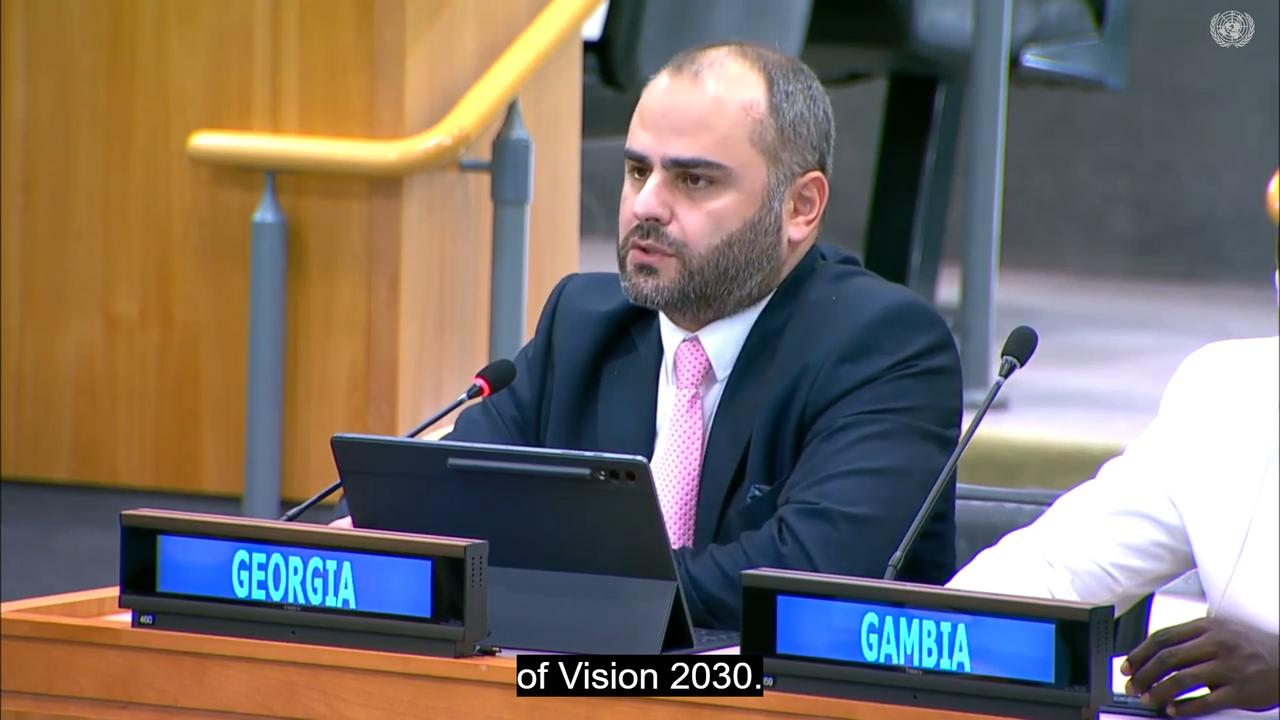
From October 3 to November 26, 2025, the session of the Second Committee was held within the framework of the 80th session of the UN General Assembly. The theme of the Committee's General Debate was "Five years to 2030: multilateral solutions for sustainable development".
On October 7, within the framework of the General Debate, the national statement on behalf of Georgia was delivered by Counsellor of the Permanent Mission of Georgia to the UN, Temuri Pipia. He introduced the Committee to Georgia's achievements on the path to implementing the "2030 Agenda" and the "Pact for the Future".
He emphasized the country's impressive economic results. It was underlined that despite global challenges, Georgia maintained macroeconomic stability and recorded an average economic growth of 9.7% over the past four years. It was noted that the government continues structural reforms aimed at diversifying trade markets, improving regional trade connectivity, and ensuring energy security.
The delegate noted that by the end of 2025, the full localization of the Sustainable Development Goals (SDGs) is planned in all 64 municipalities, for which a corresponding action plan has been approved. In the context of digital transformation, the Georgian side highlighted the role of Artificial Intelligence (AI) in development. It was noted that the "Strategy for the Development of the Digital Economy and Information Society of Georgia for 2025-2030" has been adopted, in which AI constitutes an important component. Furthermore, to combat climate change, Georgia will adopt a third-generation, more ambitious "Nationally Determined Contribution" (NDC 3.0) document.
In his statement, Temuri Pipia drew attention to the illegal occupation of the Abkhazia and Tskhinvali regions by Russia, due to which the population living beyond the occupation line is, regrettably, deprived of the positive changes and development opportunities taking place in the rest of Georgia.